
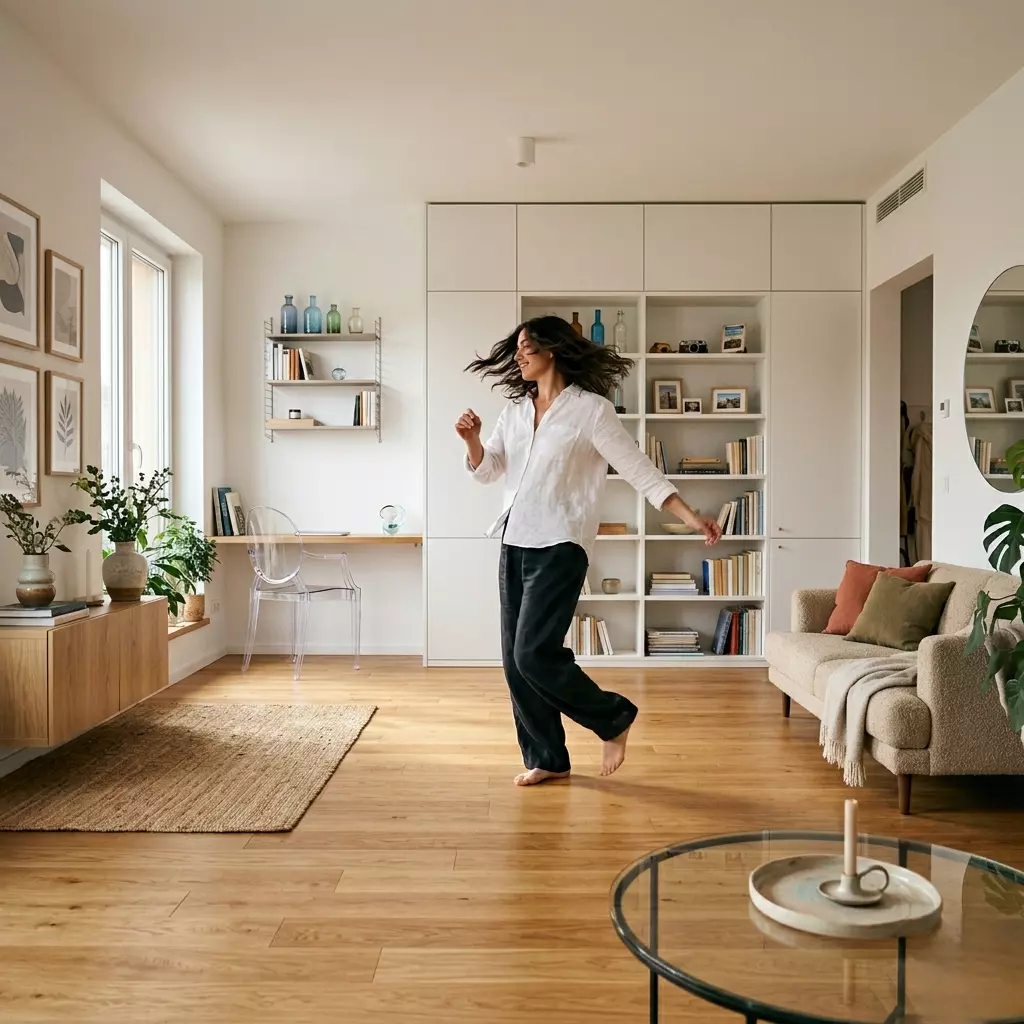
The problem with modern apartments isn’t necessarily a lack of square footage; it’s that furniture tends to "suffocate" the room. The traditional "wardrobe against the wall, sofa across from it" approach turns a living space into a storage unit. However, there is a concept known as the "invisible" interior. It allows you to fit everything you need while keeping the space open for living, energy, and plenty of room to dance.
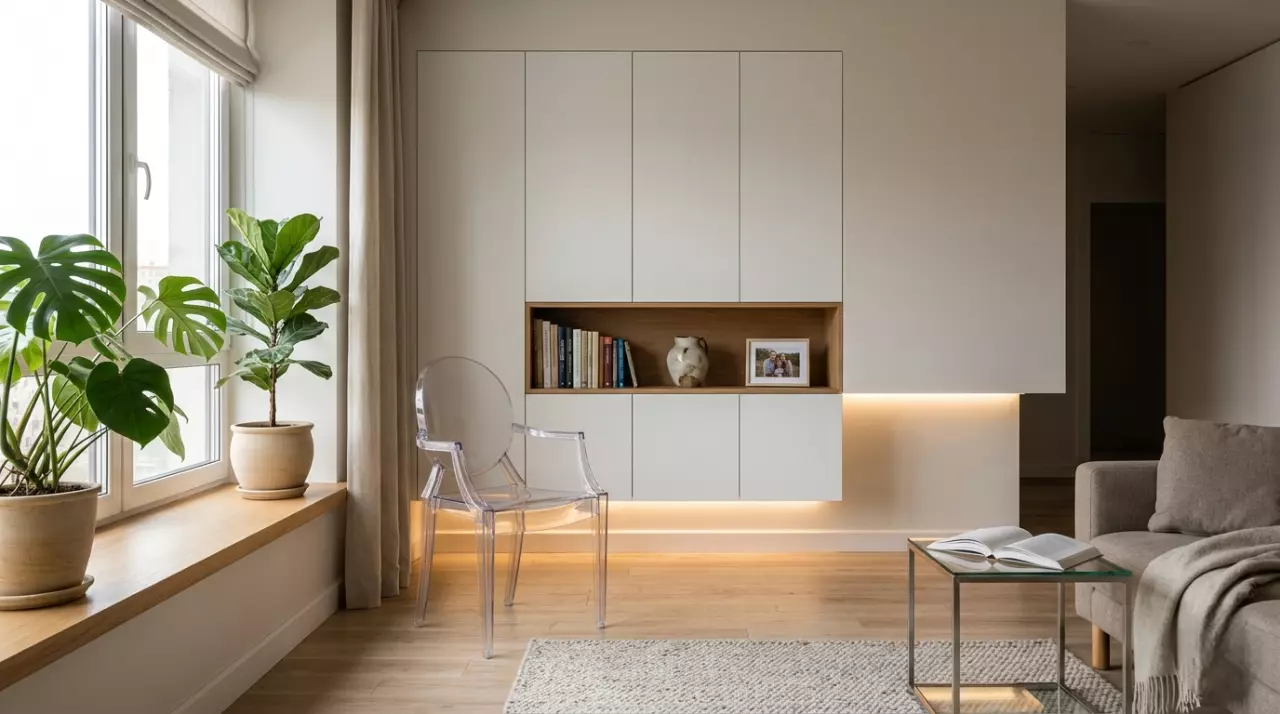
The most effective way to trick the eye is to strip furniture of its distinct outlines. In this regard, acrylic remains an unbeatable material. Kartell’s Louis Ghost chairs became legendary precisely because they don’t break up the space: your gaze passes right through them, and the brain doesn't register an obstacle. Coffee tables made of tempered glass on slim chrome legs, like Knoll’s Laccio, work the same way—they serve their purpose while remaining nothing more than a light shimmer in the room.
If transparency doesn’t fit your style, try "mimicry." Furniture that perfectly matches the color of your walls literally recedes into them. For example, floor-to-ceiling matte white storage systems, like the IKEA Bestå series without external hardware, are perceived as an architectural plane rather than a bulky object.
Human perception is simple: we judge a room’s size by how much of the floor is visible. If you can see the floor under a bed or a cabinet, the room feels empty. This is why "floating" furniture is a dancer's best friend. Wall-mounted consoles from La Redoute Interieurs or String Furniture’s modular shelving clear the lower level, creating a sense of weightlessness.
For upholstered furniture, legs are critical. A mid-century style sofa, such as the elegant n701 from Ethnicraft, sits on slim supports that allow light to pass underneath the seat. This visually strips a massive piece of furniture of half its "weight."
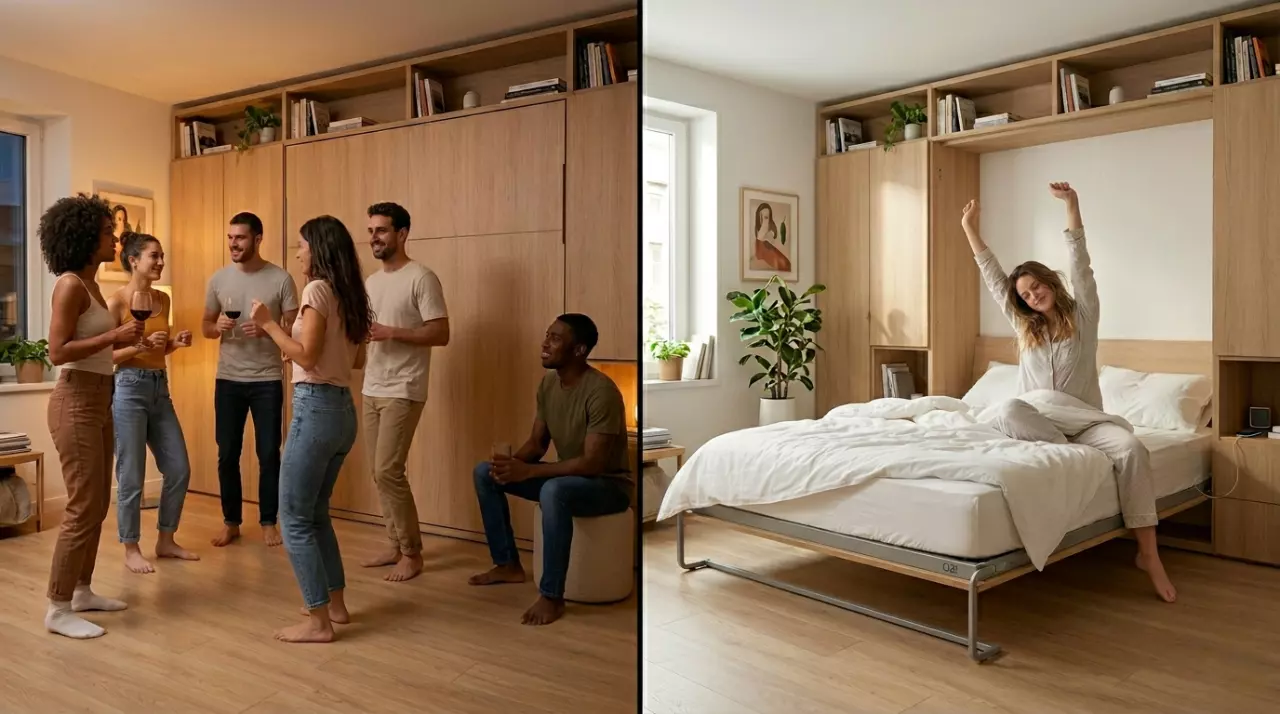
Why let a bed take up precious floor space during the day when you only need it at night? Modern Murphy beds have come a long way from the creaky fold-outs of the past. The Italian brand Clei creates systems where a full-sized bed with an orthopedic mattress can be tucked into the wall in five seconds, instantly turning a bedroom into a spacious living area or a dance floor.
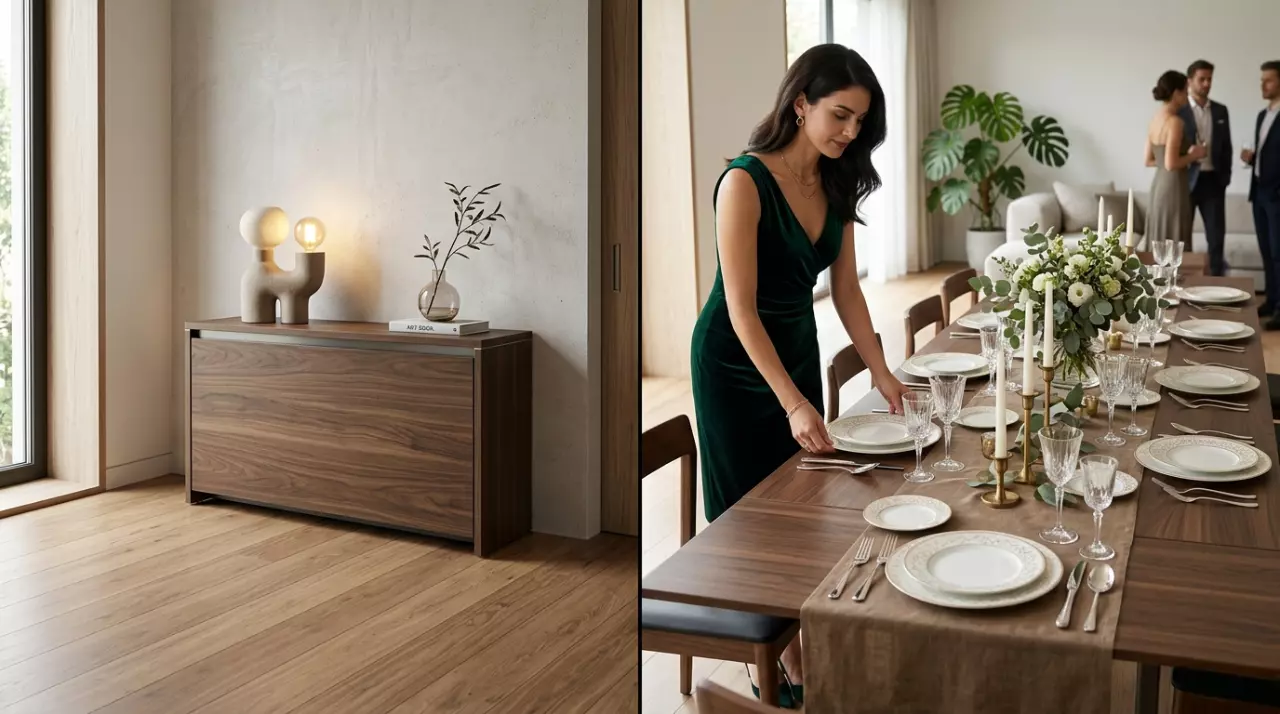
Console dining tables are equally impressive. During the week, it’s just a narrow shelf against the wall (only 8–15 inches deep) for a lamp or a vase. But when guests arrive, a piece like the Goliath console from Resource Furniture extends into a full-sized table for 10–12 people. The rest of the time, the space remains completely unobstructed.
Instead of buying extra furniture, look at the potential of the room itself. A windowsill converted into a countertop made of oak or stone can completely replace a bulky desk. If you need to zone a space, swap solid bookshelves for slim glass partitions in a black matte finish, like those from Sofia or Union. they create a psychological boundary while keeping the sightlines open.
There is also a great hack involving mirrors. Try leaning a large floor mirror against the wall at a slight upward angle (just 2–3 degrees). It will reflect more of the ceiling than the floor, which visually doubles the volume of the room without duplicating clutter or small objects on the ground.
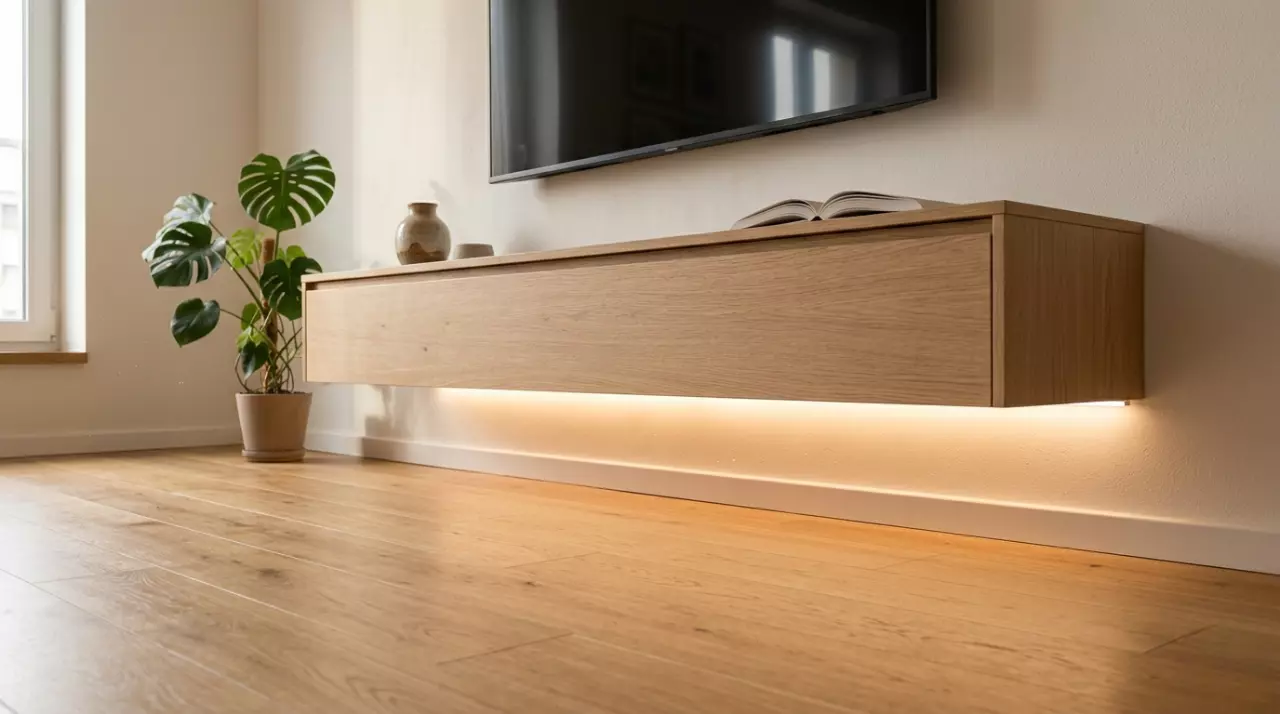
A technical detail often overlooked is that furniture feels heavy because of the dense shadows it casts. To make large pieces "levitate," designers use contour LED lighting along the bottom perimeter. Soft-glow light strips from Arlight, hidden under a kitchen plinth or a bed frame, blur the line between the furniture and the floor. As a result, even the largest object feels like a light cloud.
Pair this with directional lighting. Using slim track systems, like Delta Light, allows you to illuminate only the necessary zones, leaving furniture-filled corners in soft semi-shadow. When the eye isn't drawn to the sharp corners of cabinets, the room feels limitless.
Mirrored finishes aren't just for Art Deco vanities. Modern "invisible" objects use polished surfaces to literally blend into their surroundings. For instance, Tom Dixon’s iconic Flash coffee table, with its mirrored shine, doesn't create its own "color spot" but instead mirrors the pattern of the floor and walls.
You can achieve a similar effect using furniture with frosted glass or polished steel facades. A tall dresser or a cabinet from Kartell’s Componibili collection in a metallic finish softly blurs reflections without overloading the interior with extra detail. Thanks to their cylindrical shape, these pieces lack sharp corners, which is crucial for moving freely around the room.
One of the most underrated techniques is using heavy, wall-to-wall drapes. Behind thick fabric from Kvadrat or Zimmer + Rohde, you can hide an entire storage system, an ironing board, open bookshelves, or even a compact workspace. When the curtains are closed, the room transforms into a sleek, "soft" cube with perfect acoustics. This doesn't just clean up the space visually—it instantly prepares the room for guests or dancing by hiding everything extra with one simple motion.
There is a concept of "visual noise" created by small details. To keep a room from looking cluttered, choose furniture with integrated hardware. The absence of protruding handles on wardrobes and cabinets (using Push-to-open systems or Gola profiles) makes the furniture's surface feel like a seamless part of the wall.
Remember: every item you move from the floor to the wall, or hide in a convertible unit, gives you back those precious few feet for movement. A true "invisible" interior isn't about an absence of furniture; it’s about expertly camouflaging it into the architecture of your home.


Convert US to EU and UK shoe sizes accurately. Exact centimeter charts, brand fitting rules (Nike,...
Discover which household appliances are becoming obsolete in 2026. Separating tech marketing myths from reality: what...
Tired of wrong sizes? Learn how to measure your body, read garment charts, and buy dresses...