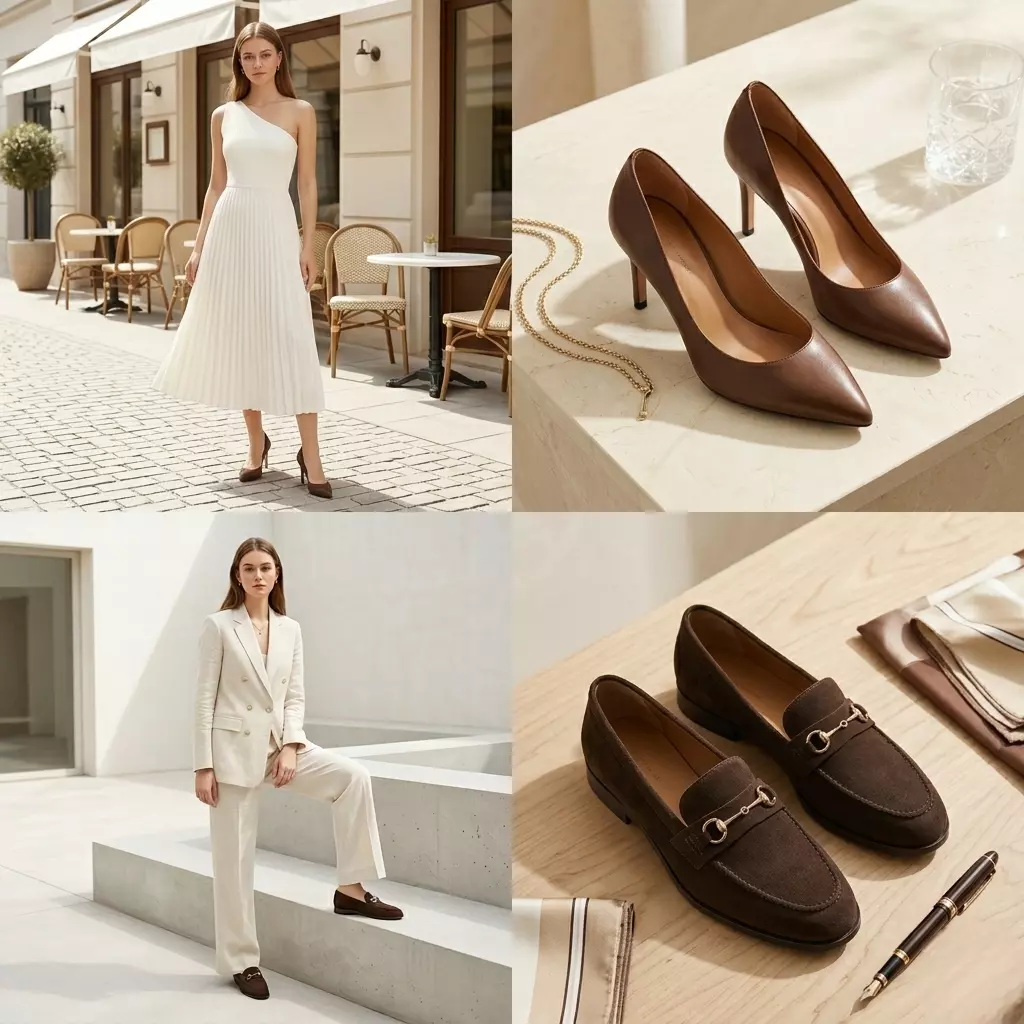
The “Old Money” style isn’t about logos — it’s about the quiet whisper of quality. In this context, shoes play a defining role: while a bag can be understated, your footwear must carry the entire posture of the look. To find a pair that looks like it costs thousands — without the price tag — you need to focus on the details mass-market brands usually overlook.
1. Structure and Shape: the “clean toe” rule
The first thing that gives cheap shoes away is visual clutter.
- Avoid unnecessary seams: The toe box shouldn’t have horizontal seams unless you’re dealing with Oxfords. A single-piece leather upper (wholecut) always looks significantly more expensive.
- Thin sole: Thick rubber soles with heavy tread are the enemy of quiet luxury. Look for slim leather soles or high-quality alternatives (like tunite). Even a 2–3 mm difference in sole thickness can shift the perception from “work shoes” to “refined elegance.”
- Toe shape: The most current and “expensive-looking” options are either an elongated soft square or a moderately pointed toe. Avoid overly long “elf” shapes or overly round, childish silhouettes.
2. Materials: matte depth vs glossy shine
Mass-market brands often rely on patent leather or polyurethane to mask material imperfections.
- Nappa and Box Calf leather: These are luxury favorites. The leather should have a subtle grain and a soft matte glow. If it looks overly shiny or feels plastic-like, it will cheapen the entire outfit.
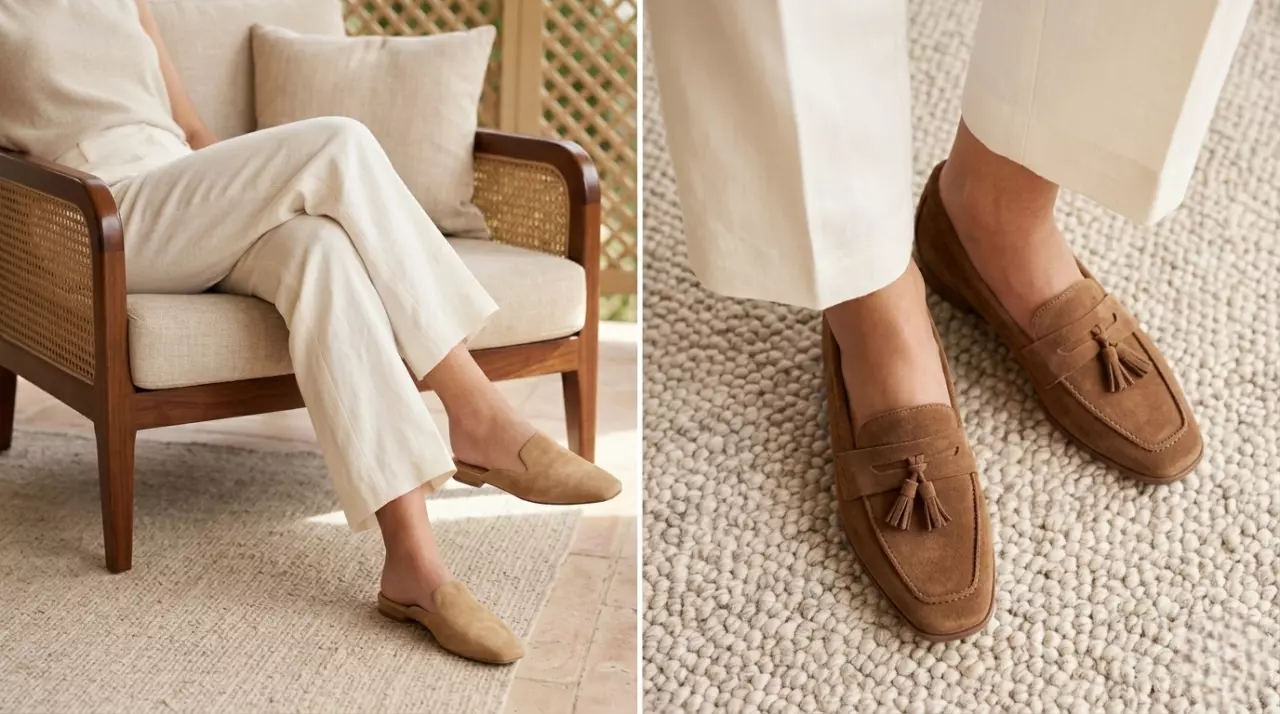
- Suede: This is a true Old Money cheat code. Deep chocolate, sandy beige, or rich navy suede always looks more expensive than smooth leather in the same price range. It diffuses light softly and hides creases.
- Color matters: “Expensive” colors are inspired by earth and stone — taupe, burgundy, cream, camel. Black is a staple, but it’s those muted, complex tones that create a bespoke feel.
3. Technical details: hardware and finishing
- No flashy “gold”: Cheap plating on buckles wears off quickly. If there’s hardware, it should be matte, brushed metal or discreetly hidden. Ideally — leather-covered buttons or tone-on-tone buckles.
- Interior lining: High-quality shoes always have leather lining (light beige or goat leather). Textile or synthetic interiors lose shape quickly and look untidy.
- Heel tips: Replace cheap plastic heel caps immediately after purchase. That loud, hollow clicking sound when walking instantly ruins the quiet luxury effect.
4. What to actually look for in stores
To navigate real-world shopping, keep an eye out for these styles and brands that follow classic aesthetics at a reasonable price point:
- Tassel or penny loafers: Instead of classic Gucci styles with bold hardware, look for minimal versions from Massimo Dutti or Meermin. They use quality leather and Goodyear welt construction — typically found in premium footwear.
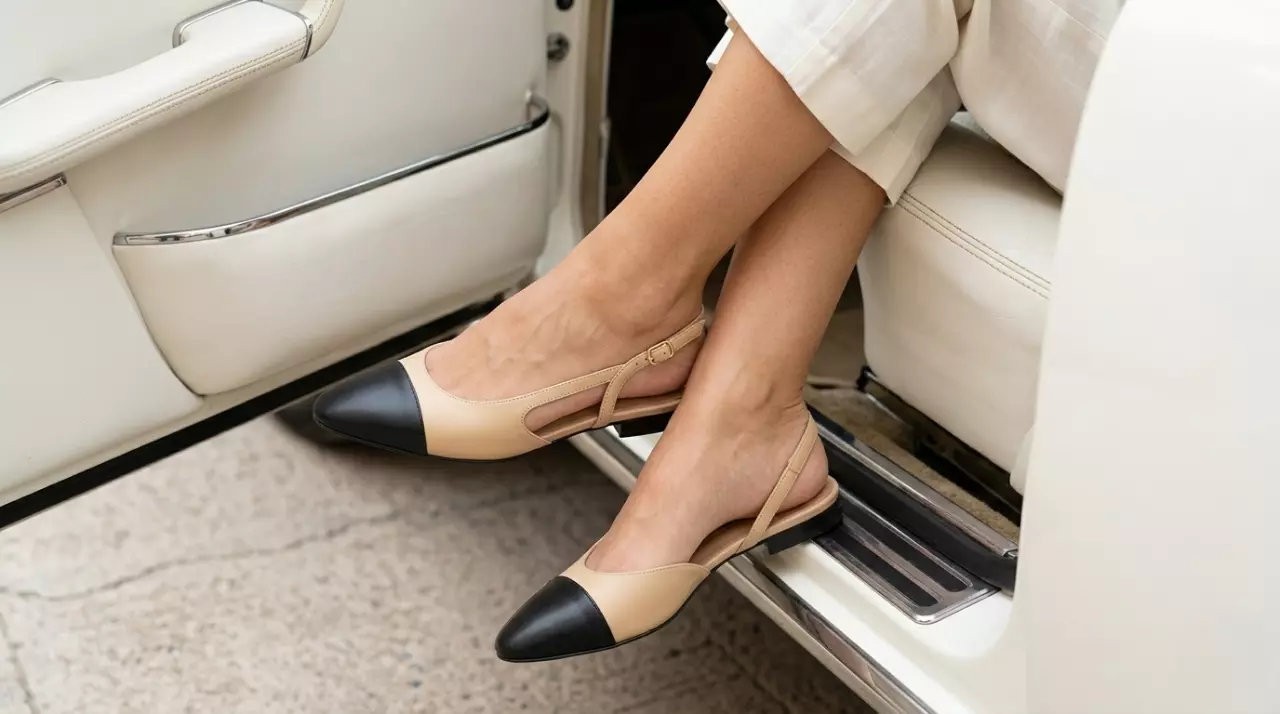
- Slingbacks: The reference point is the iconic two-tone Chanel pair. Brands like Jonak or Uterqüe (now part of Massimo) often produce beige leather versions with a black toe. This contrast visually shortens the foot and looks incredibly refined.
- Suede mules: Look for styles reminiscent of Loro Piana Summer Walk. The original costs around $1000, but brands like Aetrex or Manfield offer достойные alternatives without unnecessary embellishment.
- Pointed-toe ballet flats: Skip soft slipper-like versions and choose structured leather flats that hold their shape.
5. The hidden detail: care as part of the investment
Even $2000 shoes will look cheap if they’re creased or scuffed.
- Wooden shoe trees: Use cedar shoe trees. They absorb moisture and smooth out creases, keeping that “just-bought” shape for years.
- Wax-based cream: Use products like Saphir. They don’t just cover damage — they nourish the leather and create a deep, natural sheen that cheap silicone sponges can’t replicate.
6. Heel construction: stability and sculptural shapes
In mass-market shoes, the heel often reveals the true quality through materials and joins.
- Wrapped vs stacked heel: For an Old Money aesthetic, go for a heel wrapped in the same leather as the shoe (creating a seamless look) or a stacked leather heel with visible layers. Avoid plastic heels painted to mimic wood — the coating chips easily.
- Architectural kitten heel: A small heel (3–5 cm) looks far more refined than a stiletto. Key detail: it should be slightly set under the heel (French positioning), not placed at the very edge. This creates better weight distribution and that effortless, graceful walk.
7. A “quiet” sole and edge finishing
A lesser-known but crucial sign of quality footwear is edge finishing.
- Closed-channel stitching: In luxury shoes, the seam attaching the sole is often hidden in a channel and sealed with leather. A clean sole with no visible threads signals high craftsmanship.
- Edge finishing: Look at the cut edge of the leather. Cheap shoes often use thick “rubber paint” that cracks. High-quality pairs are sanded and wax-polished, resulting in a thin, clean edge.
8. Faux textures: how not to get fooled by “reptile”
Croc or python embossing is a smart shopping choice — it’s durable and hides scratches well.
- Scale variation: For embossing to look expensive, the pattern must be irregular. Nature doesn’t repeat perfectly. If the scales look identical — it’s a cheap print.
- Color depth: In quality embossing, pigment penetrates the grooves. If the recesses appear lighter than the surface, it looks fake.
9. Core wardrobe staples
Continue building your collection with these essential pairs:
- Riding boots with a straight shaft: Look for pull-on styles without zippers. The clean line from ankle to knee creates that polished equestrian feel. Think Massimo Dutti (limited collections) or Vagabond (Kenova line).
- Two-tone loafers (spectator shoes): Cream and brown or white and navy combinations. This is peak Old Money styling. Look for brands like Velvet Street or vintage Loake lines.
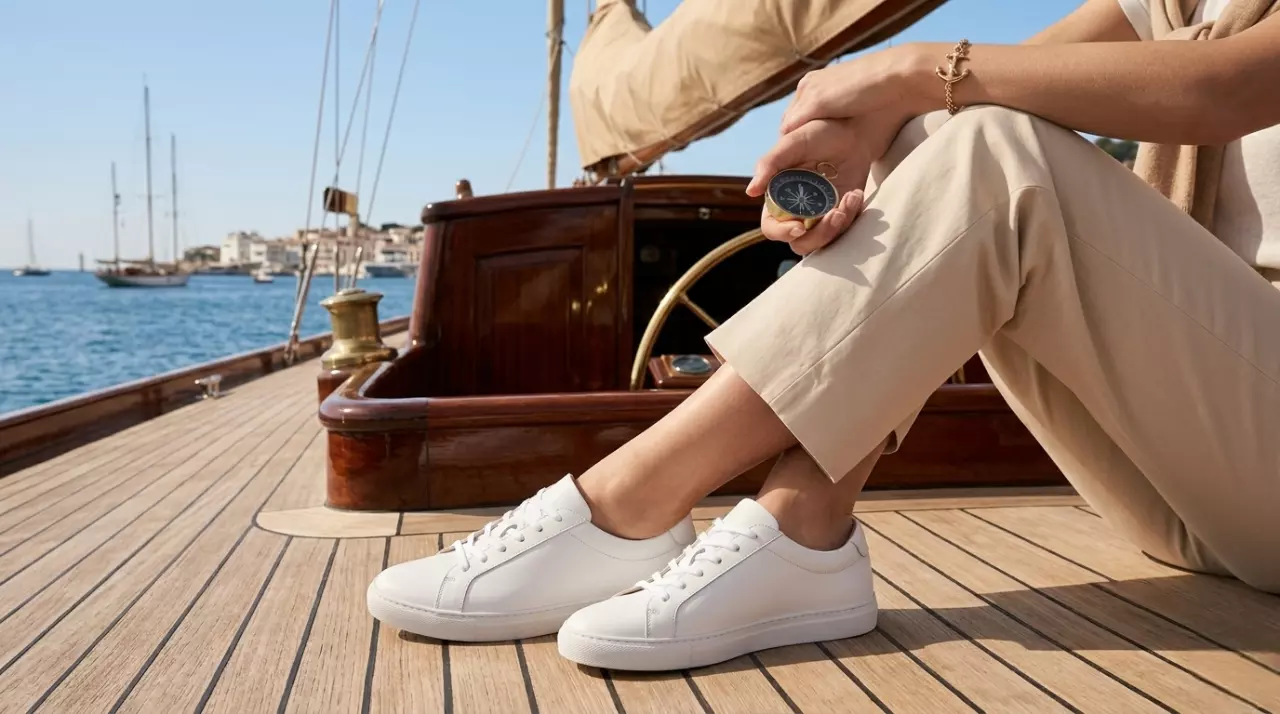
- Minimal white sneakers: The only acceptable sneakers in this aesthetic. No mesh, no air bubbles, no logos. Just smooth matte leather and a flat sole. The gold standard is Common Projects, but alternatives from Clae or Selected Femme look just as refined with proper care.
10. Life hack: the “three-meter rule”
When shopping, step back three meters from the mirror.
- If you still notice flashy buckles or rhinestones — it’s a bad buy.
- If what stands out is the silhouette, color harmony, and refined sheen — the pair will look expensive even five years later.
Technical check: Bend the shoe at the natural flex point. Quality leather forms fine wrinkles that quickly disappear. Deep creases that turn white indicate polyurethane coating — and short lifespan.
In conclusion, “quiet luxury” underfoot is about the triumph of form over decoration and quality over quantity. By choosing shoes with clean lines, natural matte textures, and impeccable finishing, you’re investing in a wardrobe that stands the test of time — and looks far more expensive than its price. True elegance lies in the details: the curve of a heel, the absence of loud branding, and thoughtful care that preserves the leather’s original beauty.