The world of baby products has moved far beyond just "rattles and strollers." Today, it is a high-tech sector where artificial intelligence, biometrics, and advanced materials science tackle two primary goals: ensuring the child's safety and preserving the parents' energy and well-being.
In this overview, we’ll dive into innovations that felt like science fiction just yesterday but are already transforming the daily lives of modern families.
1. AI-Managed Sleep: Smart Robotic Cradles
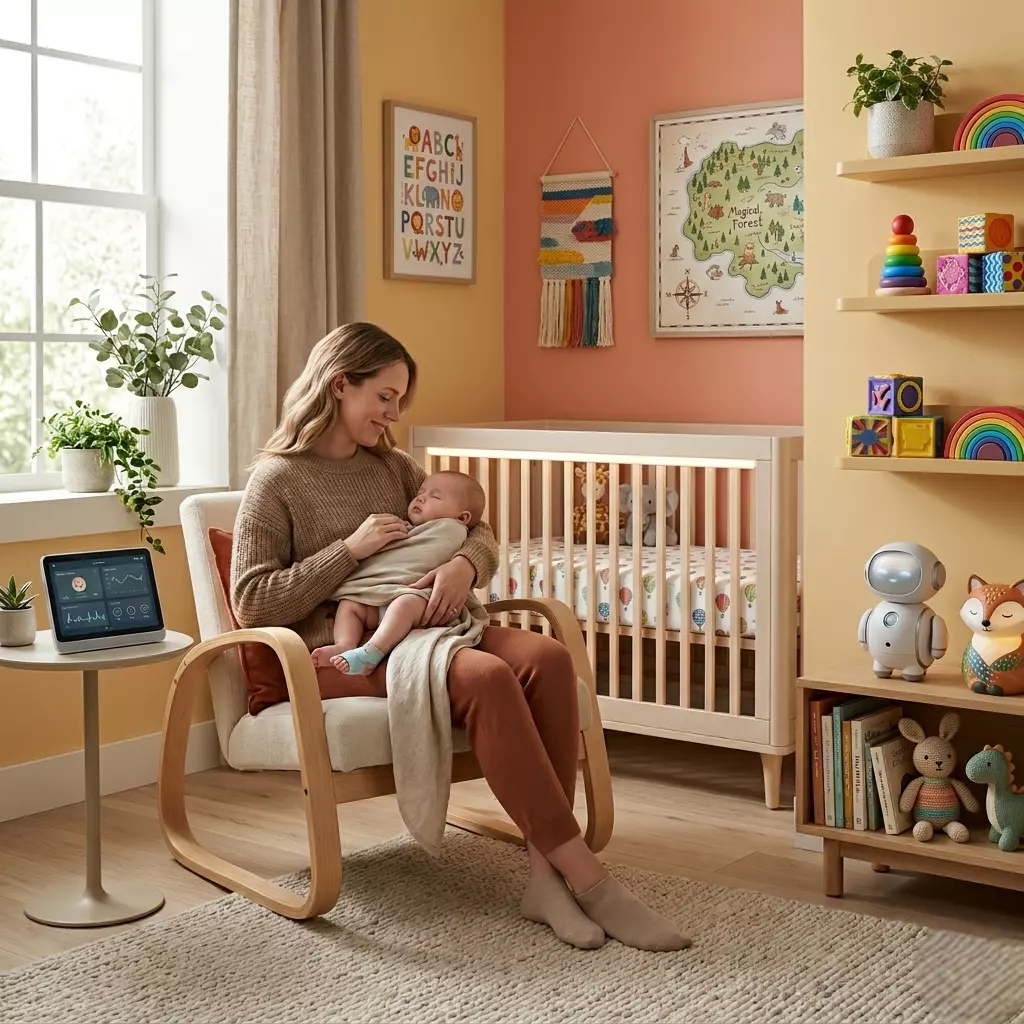
Sleepless nights are the biggest "pain point" for new parents. The next generation of cribs doesn't just rock the baby; it analyzes why they are waking up in the first place.
- Example: Cradlewise. This isn't just a bassinet; it’s a comprehensive smart system featuring an AI-driven nanny.
- Technical Details: Built-in sensors track micro-movements and breathing patterns. If the AI detects the "light sleep" phase and senses the baby is about to wake up, the crib begins a gentle bouncing motion before the baby even starts to cry.
- Practical Tip: Use these gadgets to establish a routine. The system feeds sleep analytics into an app, helping you identify exactly when your child is ready to transition to a single daytime nap.
2. Safety 2.0: Car Seats with Integrated Airbags
Many parents aren't aware that standard car seats protect against impact but don't always fully absorb the inertia affecting a child's head.
- Example: Cybex Anoris T i-Size. This is the world’s first car seat with an integrated, full-sized airbag.
- Technical Details: The airbag is tucked away within the impact shield. In a collision, it deploys in milliseconds, forming a "C" shape. This reduces neck strain by 50% compared to traditional forward-facing seats.
- Little-Known Fact: Unlike standard vehicle airbags, the "baby" version inflates with much lower pressure to avoid injuring a child's delicate ribcage.
3. Health at a Distance: Wearable Biometric Trackers
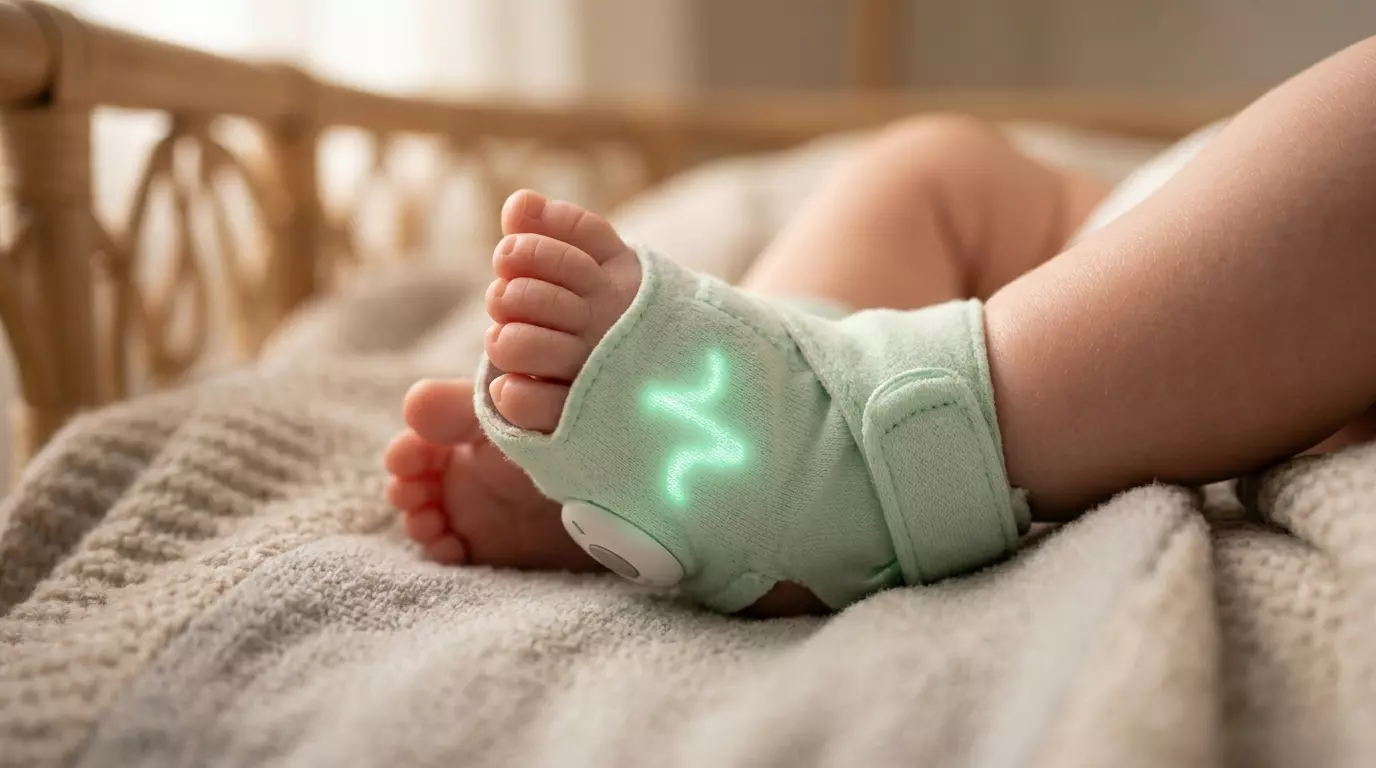
Forget classic baby monitors that only transmit sound. The new generation of gadgets keeps a constant eye on vital signs.
- Example: Owlet Smart Sock 3. A soft sock that fits comfortably on the infant's foot.
- Technical Details: It uses pulse oximetry (similar to medical-grade equipment). The tracker measures blood oxygen levels and heart rate. If readings fall outside the preset "safe" zones, the base station and your smartphone instantly trigger an alarm.
- Innovation: Modern models now integrate with smart home systems. If the tracker detects the baby is overheating, it can automatically signal the AC to lower the room temperature.
4. Robotic Strollers: "Hands-Free" Mobility
Strollers that drive themselves are no longer just concepts—they are becoming a reality on city streets.
- Example: Ella by Glüxkind. A Canadian startup has developed a stroller with an adaptive electric drivetrain.
- Technical Details:
- Hands-Free Mode: The stroller follows the parent at a safe distance, using computer vision to navigate around obstacles (used when the child is walking beside you, for example).
- Smart Braking: If you accidentally let go of the handle on a slope, an intelligent braking system locks the wheels instantly.
- Rock-My-Baby: A built-in feature that provides an automatic back-and-forth rocking motion to soothe the baby.
5. Intellectual Learning: Toys with Generative AI
Toys no longer just repeat canned phrases. Now, they are genuine conversationalists.
- Example: Miko 3 or Curio (powered by ChatGPT).
- Technical Details: These robots use deep learning algorithms to adapt to a child’s unique personality. They recognize facial expressions and can engage in dialogue, explaining complex scientific facts or making up bedtime stories on the fly where the child is the hero.
- Practical Aspect: This is a fantastic tool for language learning. Children interact with the AI through play, overcoming language barriers without the pressure of a formal teacher.
6. Ecology and Material Science: Self-Cleaning Clothes and "Growing" Footwear
Future trends aren't just about microchips; they’re about smart fabrics. The industry is pivoting toward sustainability so parents don't have to buy a new wardrobe every three months.
- Example: Petit Pli. This brand has created clothing designed to grow alongside the child.
- Technical Details: The fabric features a patented "plissé" (pleated) structure that expands in two directions. A single outfit can span ages 9 months to 4 years (essentially 7 sizes in one).
- Innovation: The material is highly durable, waterproof, and engineered at a nano-level to repel dirt.
- Little-Known Fact: The design was inspired by satellite technology in the aerospace industry, where solar panels must fold compactly and deploy flawlessly in space.
7. Smart Feeding: Analytical Bottles and Instant Warming
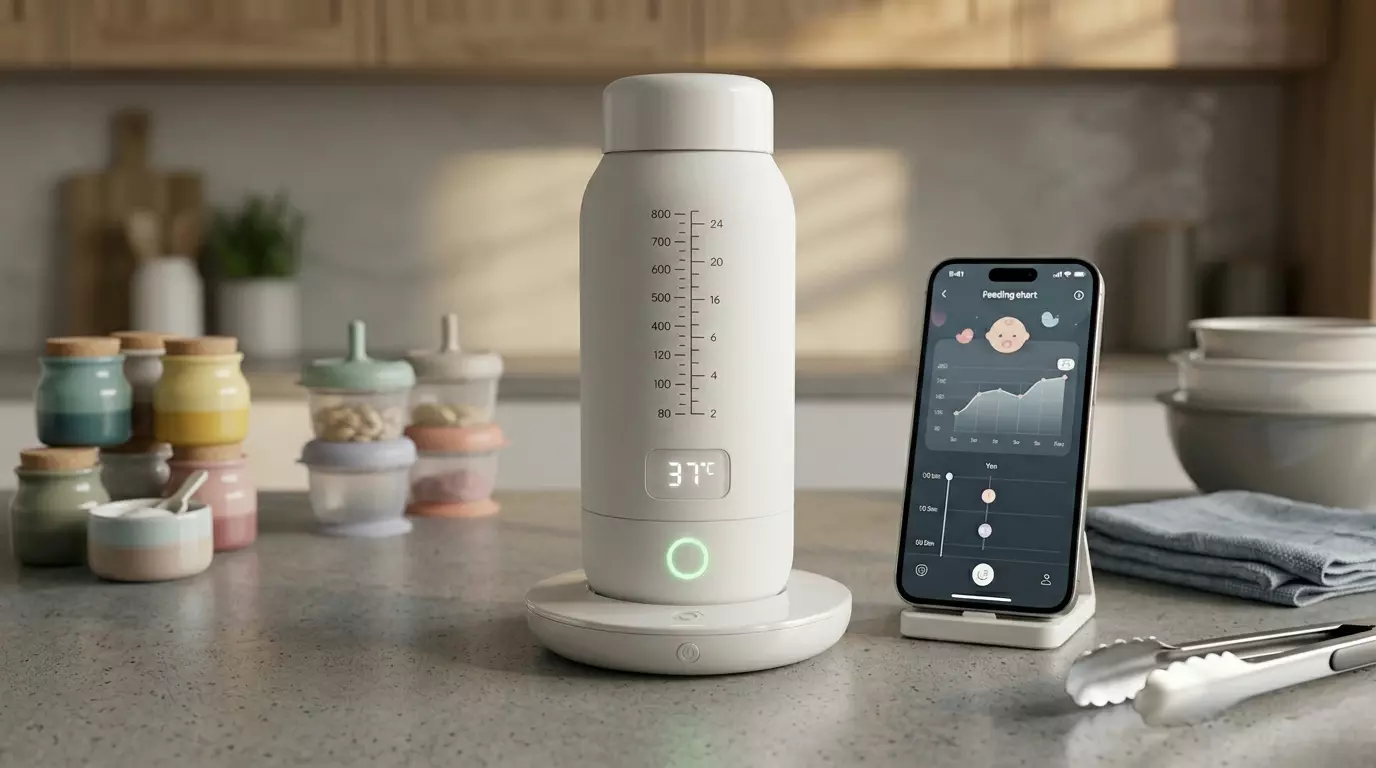
The struggle of getting the formula temperature just right and tracking intake is now solved digitally.
- Example: Ember Baby Bottle System.
- Technical Details: The bottle is equipped with an integrated heating element and thermal sensors. Through an app, parents set the desired temperature, and the system maintains it until feeding time.
- Practical Tip: The system automatically logs feeding times and volumes. This data is invaluable for pediatricians to track growth trends, especially for premature babies or those transitioning to formula.
8. Neurotechnology in the Nursery: Support for Hyperactivity
Modern gadgets are beginning to work with the brain's neuroplasticity, helping children manage stress or attention deficits.
- Example: Myndlift or similar neurofeedback devices.
- Technical Details: A lightweight headset reads EEG (brain wave activity). Through games on a tablet, the child learns to concentrate. If the brain "drifts," the game slows down, prompting the child to mentally refocus to continue.
- Significance: This is a non-invasive way to train the brain, currently being actively tested as a supplement to ADHD therapies.
9. Virtual Reality for Health: VR Pain Management
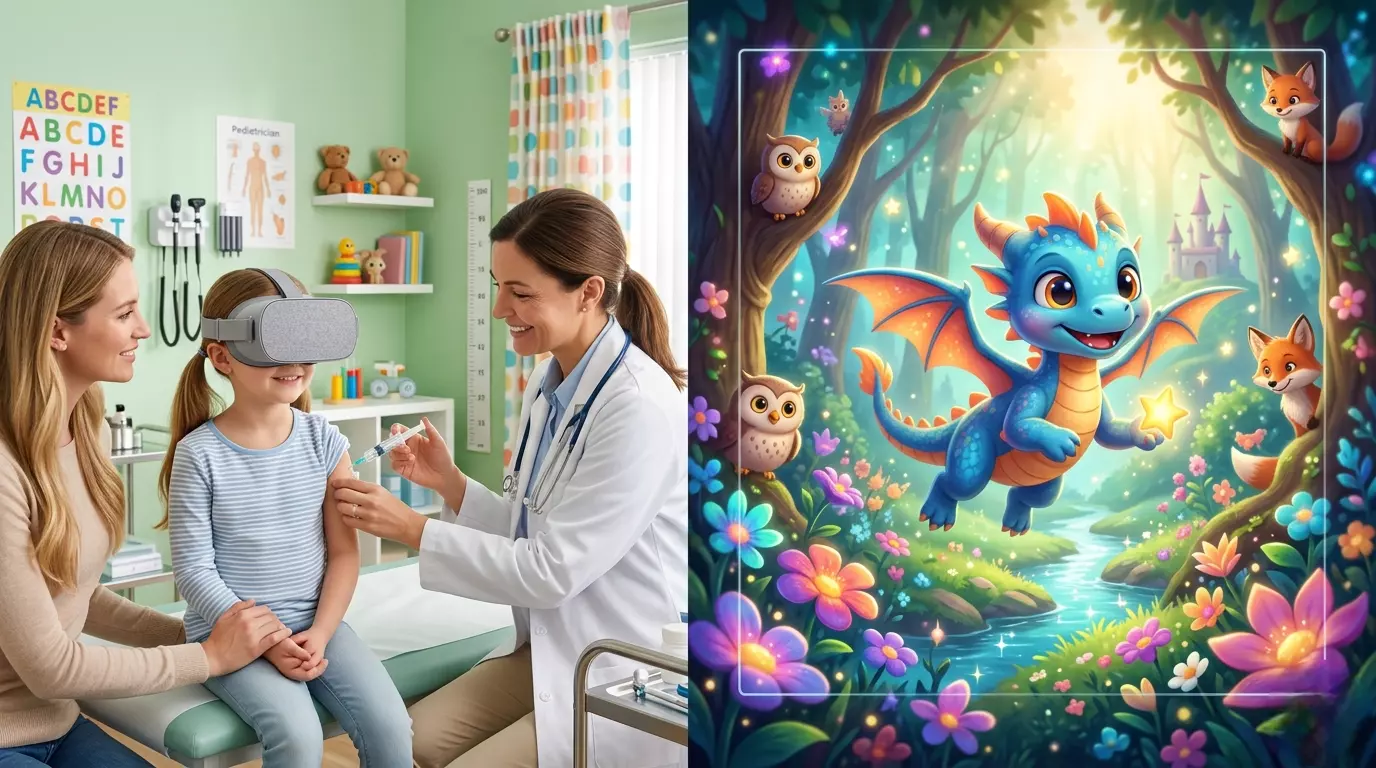
A lesser-known but rapidly growing field is the use of VR goggles during medical procedures like vaccinations or blood draws.
- Technology: Specialized content (such as that from Smileyscope) synchronizes the virtual world with physical sensations. For instance, when a nurse wipes the skin with alcohol, the child sees a "cool ocean breeze" in the goggles; at the moment of the injection, they see a "magic fish nibble."
- Result: Studies show a 60-70% reduction in fear and pain levels. This fundamentally changes a child's relationship with healthcare.
10. Smart Diapers: A Lab in Your Pocket
The future of hygiene isn't just about absorption—it’s about diagnostics.
- Example: Lumi by Pampers (in partnership with Verily/Google).
- Technical Details: A reusable sensor attaches to the diaper, notifying you when it needs changing while also analyzing sleep and hydration patterns.
- Outlook: Sensors are currently in development that can analyze urine in real-time to alert parents to the onset of a UTI or changes in sugar levels.
Final Practical Takeaway:
When choosing a "gadget from the future," always ask: "What specific problem does this solve?" Innovation for the sake of innovation gets old fast. But if a device truly automates a exhausting routine (like Cradlewise) or enhances safety (like Cybex Anoris), it is worth every cent. We are living in an era where technology has finally started to prioritize the mental health of parents as much as the comfort of their children.