
Choosing wireless earbuds in 2026 is no longer just about finding "sound without wires." It’s about selecting a wearable computer that will stay with you for 5 to 8 hours a day. Bluetooth audio technology has taken a massive leap forward, and today, reliability is defined not just by the brand, but by the underlying hardware architecture.
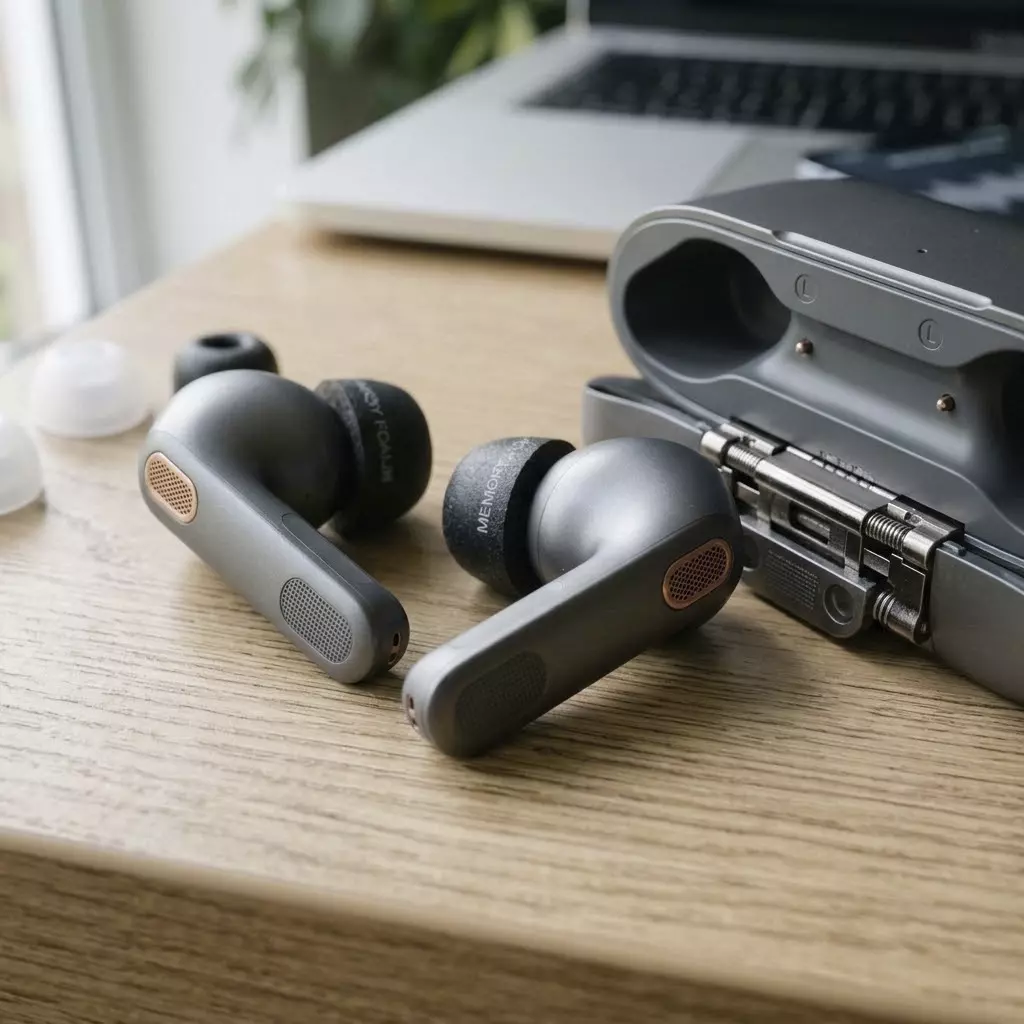
Below is a practical guide to help you choose a device that won’t let you down after a month of use.
If you’re buying earbuds today, the first thing you should look for in the specs is support for Bluetooth LE Audio and the LC3 codec.
Why it matters: The old Bluetooth Classic standard is a massive battery drain and suffers from high latency. LE Audio (Low Energy) allows earbuds to last significantly longer on the same battery size and provides a much more stable connection in high-interference areas like subways or shopping malls.
The "Hidden Gem" (Auracast): This is a game-changing technology that’s currently rolling out. It allows your earbuds to tune into public broadcasts. For example, at an airport, you’ll be able to "tap into" a silent TV in the lounge or hear flight announcements directly in your ears. If your earbuds don't support LE Audio, you’ll miss out on this entirely.
Many people chase after LDAC (Sony) or aptX Adaptive (Qualcomm), believing they are the ultimate guarantee of quality.
Practical advice: High-Resolution (Hi-Res) codecs only make sense if:
A crucial detail: On budget earbuds, LDAC often runs unstably, causing audio stutters when your phone is in your pocket. If you value reliability, look for Snapdragon Sound support. This is a comprehensive certification ensuring minimal latency and a rock-solid connection.
By 2026, noise cancellation has become fully adaptive. Quality earbuds now automatically adjust the filtration level based on the ambient roar around you.
How to test it: Put the earbuds in and turn on ANC without playing any music. If you feel an intense "pressure" on your eardrums—that deep vacuum sensation—it’s a sign of poor filter implementation. Modern chips (like Apple’s H-series or Sony’s V-series) cancel noise smoothly without causing nausea or headaches.
Bone Conduction Microphones: Top-tier models now use more than just external mics for calls; they use sensors that pick up the vibrations of your jawbone. This is the only way to ensure you can be heard clearly during a gale-force wind.
"6 hours on a single charge" is the current industry standard. However, there’s a hidden issue: battery degradation.
Case in point: After a year of heavy use, TWS earbuds typically lose about 20–30% of their capacity. Look for models with a "Battery Preservation" or "Optimized Charging" feature. These don't keep the battery at 100% all night; instead, they top off the final 20% right before you wake up. This can extend the lifespan of your earbuds from 2 years to 4 years.
For long-term reliability, the IP rating (water resistance) isn't the only thing that matters—protection against earwax and dust is just as vital.
Pro Tip: Take a look at the nozzle mesh. It should be metal or have a specific protective insert. Plastic micro-meshes clog up quickly, making the sound quieter in one ear. Users often think their earbuds are broken, when in reality, they just need a proper cleaning.
When choosing in-ear monitors (IEMs), few people consider the actual physics of sound inside the ear canal.
A practical detail: Cheaper earbuds often suffer from the "stethoscope effect"—where every step you take or the friction of the casing against your clothes echoes as a hollow thud in your ears. Reliable modern models feature pressure-relieving vents to equalize internal pressure. This not only eliminates internal body noises but also allows you to wear the earbuds for hours without that "plugged ear" sensation.
A little-known fact: Memory foam tips provide much better isolation than silicone, but they are a consumable item. If you plan on keeping your earbuds for a long time, check immediately if third-party replacement tips (like Comply) are available for that specific model.
Reliability in controls means an absence of ghost touches.
Touch vs. Button: In 2026, the best tactile experiences come from "pinch" sensors (like those in AirPods Pro or Nothing Ear) or physical buttons with short travel. Standard touch panels often misfire due to a hat, raindrops, or simply when you're adjusting the fit.
Proximity Sensors: Ensure the earbuds use an optical sensor rather than a capacitive one. An optical sensor (usually a small black window) accurately detects when you've removed the earbud and pauses the music. Capacitive sensors can get "confused" if you put an earbud in your pocket without its case, continuing to play music and draining the battery.
This is the ability to stay connected to two devices simultaneously (for example, your laptop and your smartphone).
How it works in practice: You’re watching a movie on your laptop when a call comes in on your phone. Reliable earbuds with "true" multipoint will automatically switch the audio stream to your phone and then return to the movie audio once the call ends.
The catch: Some budget models claim to have multipoint but require manual switching within an app. Real multipoint should be entirely automatic.
Wireless earbuds are products with a short lifecycle, but that cycle can be extended.
Firmware Updates: Check if the brand has an official app. Quality manufacturers release firmware updates that fix Bluetooth stack bugs, improve ANC algorithms, and even add new features (like spatial audio) a year or more after the model's release.
The Case as a Weak Link: Pay attention to the charging case hinge. If it’s plastic and feels loose or "wobbly" right in the store, it’s the first thing that will break. A metal or reinforced hinge is a sign that the device is built to last.
The easiest way to check microphone reliability before buying (if a floor model is available):
Go to a noisy area or play a recording of crowd noise on your phone. Record a voice memo and listen back. If your voice sounds "underwater" or words are being clipped, the microphone's aggressive noise suppression is ruining your speech. The ideal scenario is when the background noise is audible but your voice remains crisp and intelligible.
Final Pre-Purchase Checklist:





Discover which household appliances are becoming obsolete in 2026. Separating tech marketing myths from reality: what...

Tired of wrong sizes? Learn how to measure your body, read garment charts, and buy dresses...

Discover 7 revolutionary camping gadgets that will upgrade your outdoor experience. From tech tents to smart...