
Shopping cart

Sunglasses Markings Explained: UV, Categories & Polarization

By BAZAAR ADMIN Apr 10, 2026 232

Sunglasses Markings Explained: UV, Categories & Polarization
 

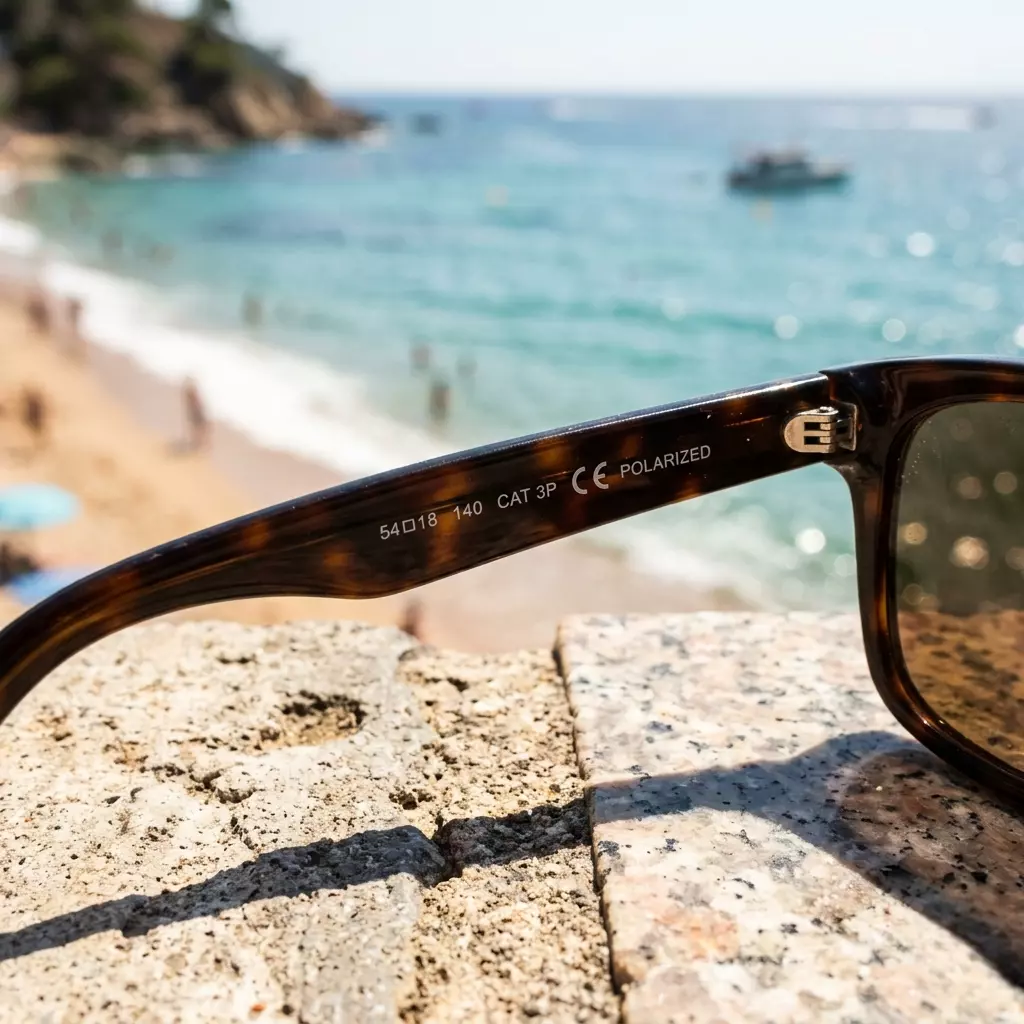
Have you ever wondered what that “secret code” printed on the inside of your sunglasses actually means? Most people assume it’s just a serial number, but in reality, it’s a kind of “safety passport” for your eyes.

Let’s break down how to read these symbols so you don’t end up buying just an expensive piece of plastic.


1. The Main Code: Filter Categories

The most important number to look for is the light filter category. It’s labeled as Cat or Filter Cat and ranges from 0 to 4. This number tells you how much visible light the lens allows to reach your eyes.

CategoryLight TransmissionBest ForExample Model
Cat 080–100%Clear or slightly tinted lenses for indoor use or dusk conditions.Oakley Radar EV (Clear)
Cat 143–80%Variable cloudiness, low light. Often pink or orange lenses.Ray-Ban Aviator (Light Yellow)
Cat 218–43%Moderate sunlight, typical urban conditions.Prada Linea Rossa (Brown Gradient)
Cat 38–18%The gold standard. Bright sun, beach, mountains.Wayfarer Classic (G-15 lens)
Cat 43–8%Extreme sunlight (glaciers, deserts). Not suitable for driving!Julbo Explorer 2.0

Important: Category 4 lenses are so dark that they can distort traffic signal visibility. If you see a “4” on the frame, it’s unsafe—and in some countries illegal—to drive while wearing them.
 

2. UV Protection: The Marking That Saves Your Retina

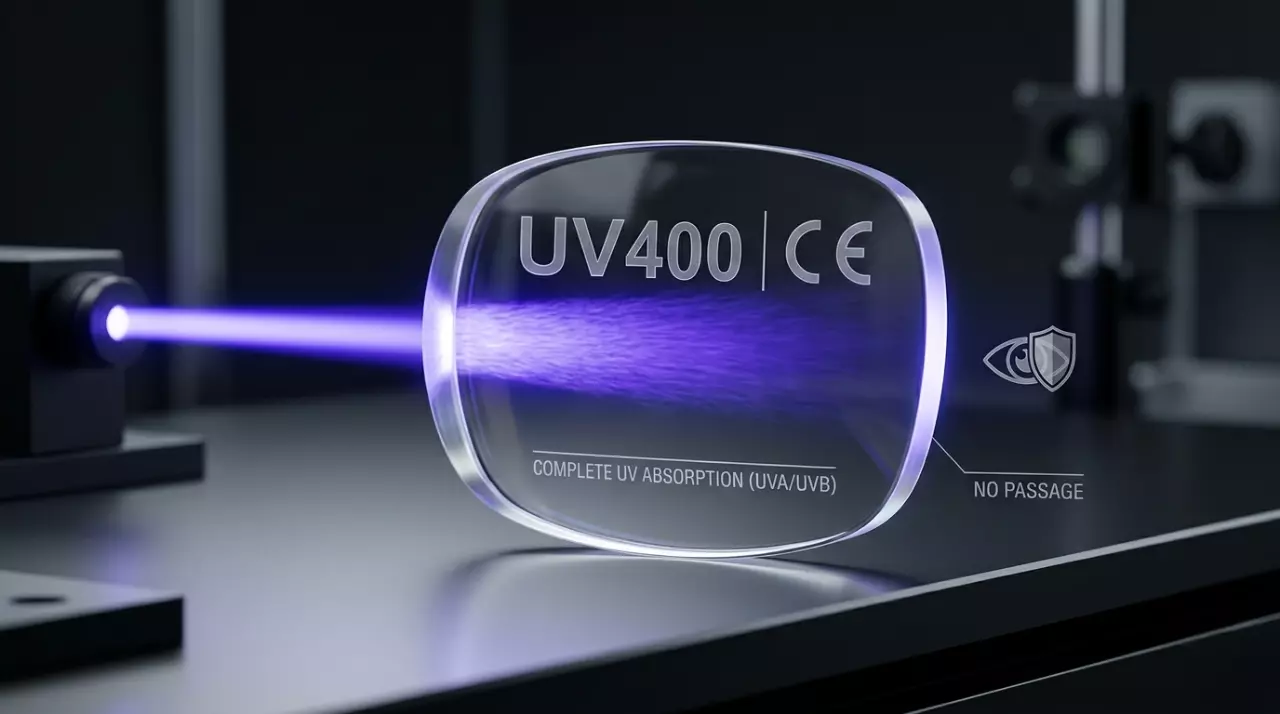
Eyes Safe: UV Labeling
 

Many people confuse tint with protection. You can buy very dark sunglasses that don’t block UV at all. These are “eye killers”: in darkness, your pupil dilates, letting in even more harmful radiation than if you weren’t wearing glasses at all.
  • UV400: The ideal standard. It means the lenses block 100% of rays up to 400 nanometers (UVA and UVB).
  • CE: European conformity mark. Confirms the glasses meet safety standards.
  • UKCA: The UK equivalent (introduced in recent years).


3. Letter Codes: P, F, N

Letter codes: P, F, P, N
 

Next to the category (e.g., 3P or Cat 2N), you’ll often see letters. Here’s what they mean:

  • N (Normal): Standard lens with no special features.
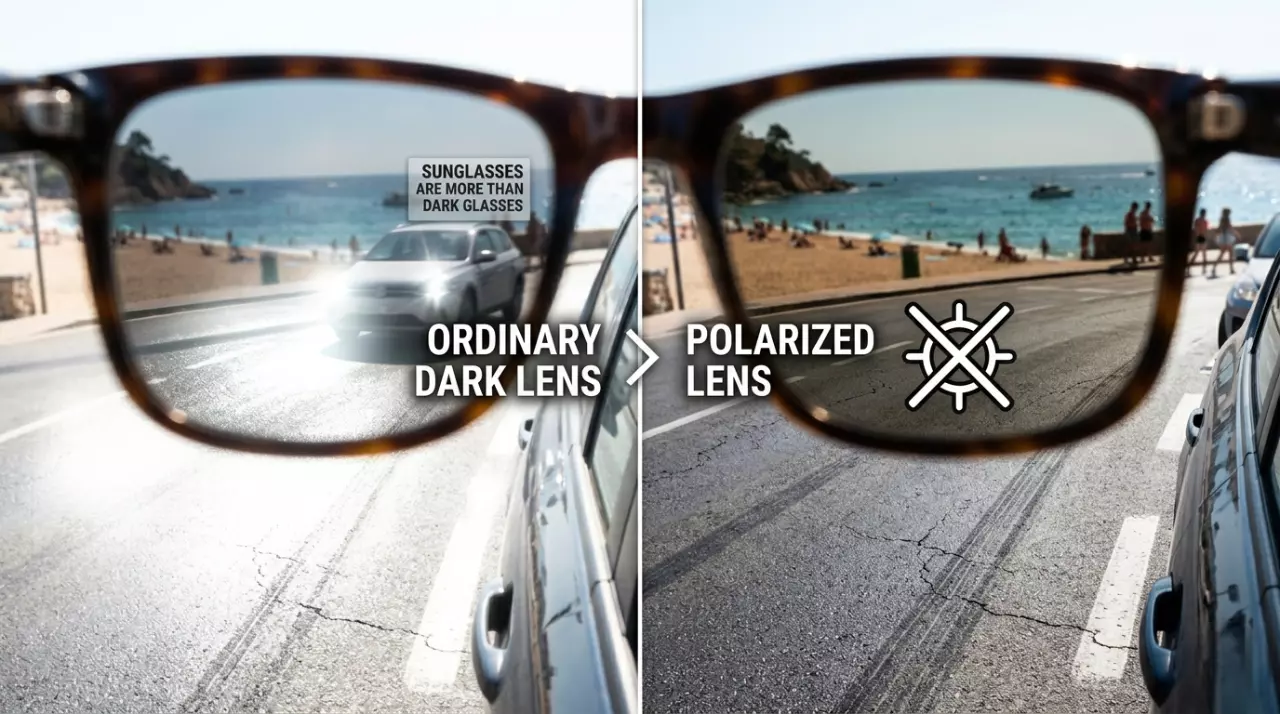
  • P (Polarized): Includes a polarization filter. It eliminates glare from water, wet roads, and car hoods.
  • F (Photochromic): “Chameleon” lenses that adjust their tint depending on light intensity.


Little-known fact: If you look at an old ATM screen or some car dashboards through polarized lenses (marked P), the image may disappear or show rainbow patterns. That’s physics—a conflict between two polarization filters.


4. Fit Geometry: Size Markings (52 [] 18 140)

You’ll often see a row of three numbers on the temple. This isn’t about protection—it’s about fit:

  • 52 (Lens Width): Affects how wide the glasses sit on your face.
  • 18 (Bridge Width): A key factor for nose comfort.
  • 140 (Temple Length): Distance from hinge to the end of the arm.

Practical Tip: How to Check Polarization in 5 Seconds

If you’re unsure whether the glasses are truly polarized, take two pairs of polarized sunglasses. Place lens to lens and rotate one pair 90 degrees relative to the other. If the overlapping area turns completely black (opaque), the polarization is genuine.

 

5. Additional Letters: V, C and More

Additional letters
 

Sometimes after the filter category (e.g., Cat 3), you’ll see additional letters that are especially important for professional use:

  • V (Photochromic/Variable): The lens changes its tint level. Unlike fixed-tint lenses, these adapt to UV exposure. Marking may look like 1–3V.
    Example: Transitions lenses or Oakley EVZero Swift series.
  • C (Color Gradient): Gradient tint. Darker at the top, lighter at the bottom. Ideal for driving: the top shields from sunlight while the bottom allows a clear view of the dashboard.
    Example: Classic women’s models by Tom Ford or Chanel.


6. Lesser-Known Codes: Anti-Glare & Hydrophobic Coatings

On premium or sports models (like Maui Jim or Serengeti), you might find technical coating abbreviations on the inner temple or even laser-etched on the lens:

  • AR (Anti-Reflective): Anti-glare coating on the inner side of the lens. Prevents your own eyes from reflecting in the lenses, reducing fatigue.
  • H (Hydrophobic): Water-repellent coating. Rain or sweat simply rolls off without leaving streaks.
  • O (Oleophobic): Protects against smudges and fingerprints.


7. Lens Color Is Not Just Aesthetic

Color isn’t encoded in numbers, but it directly affects how the “markings” perform.

  • Gray (G-15 by Ray-Ban): The most neutral. Doesn’t distort colors—ideal for everyday wear.
  • Brown/Copper: Enhances contrast. Best for driving and golf, helping you better perceive depth and distance.
  • Yellow/Orange: “Brightening” lenses. They filter blue light, improving clarity in fog or low light.
  • Green: Reduces glare and gently filters light, creating a “rested eyes” effect.


8. Breaking Down the Serial Code

If you see a long string like RB 2140 901 50-22 3N on the temple, here’s how to read it:

  • RB 2140 — Model name (in this case, Wayfarer).
  • 901 — Frame color and lens type code.
  • 50-22 — Lens width and bridge width (mm).
  • 3N — Category 3, standard lens.

Practical Buying Tips

  • For drivers: Look for P (Polarized) and category 2 or 3. Never choose category 4. If you often drive through tunnels, gradient lenses (C) are the best option.
  • For mountains and sea: Only Cat 3 or Cat 4 (if you’re not driving). At altitudes above 2000 meters, UV radiation is much more intense, so UV400 is essential.
  • Authenticity check: Brands from the Luxottica group (Ray-Ban, Oakley, Prada, Persol) use high-quality markings that shouldn’t feel like a sticker. The left lens often has a nearly invisible laser engraving (e.g., RB or a logo).
Share:

About the author

Astra

Official BAZAAR Announcer

Astra is the official voice of the EXMON infrastructure. Calm, intelligent, and direct, she speaks like a sentient protocol — efficient, yet almost warm.

Subscribe our Newsletter Subscribe our Newsletter Subscribe our Newsletter Subscribe our Newsletter
Subscribe our Newsletter
Stay updated with crypto news and offers!

Subscribe our Newsletter

Your experience on this site will be improved by allowing cookies Cookie Policy