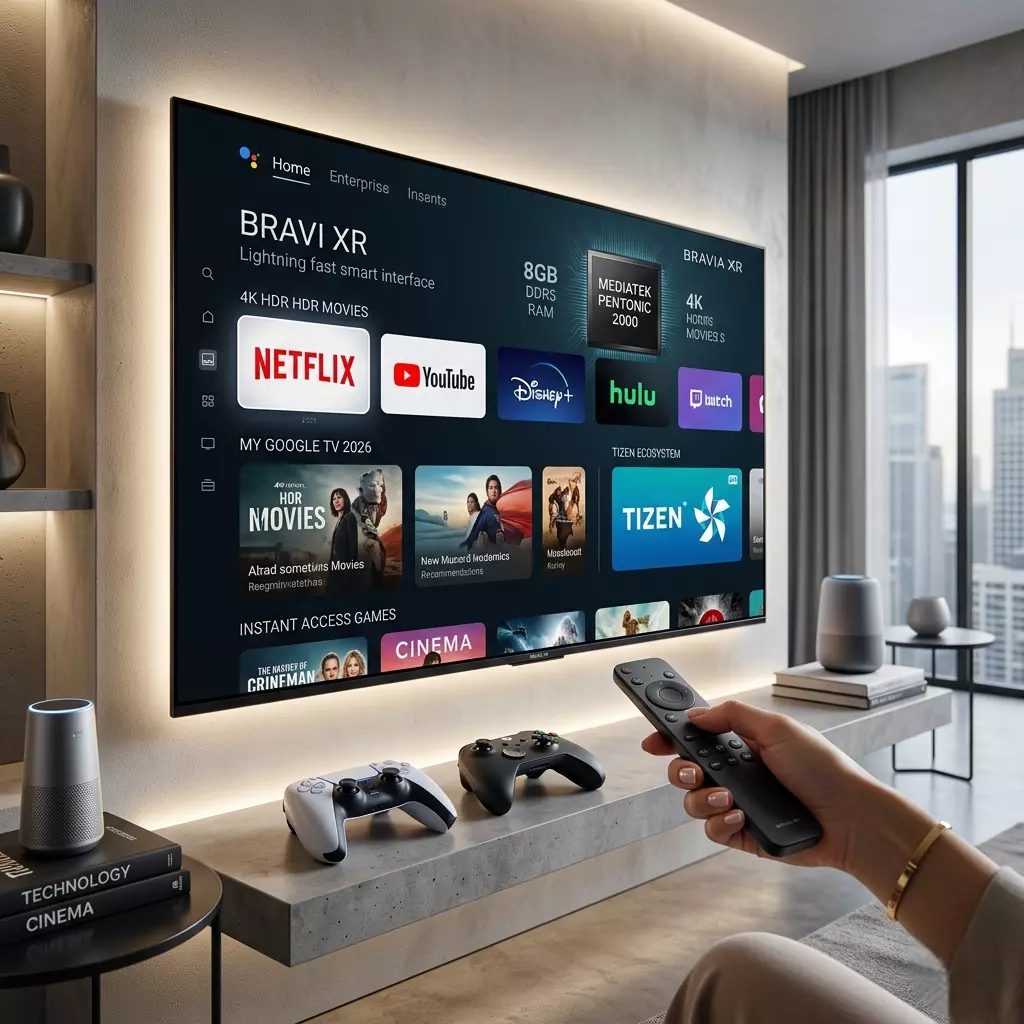
The days when a TV was just a screen for receiving a signal are long gone. Today, it’s a powerful computer where hardware and software optimization define the entire experience. If your Smart TV frustrates you with lag when opening YouTube or crashes while searching for a movie, the culprit is likely poor OS optimization or a lack of system resources.
In 2026, the market has clearly split into "closed" ecosystems and flexible platforms. Let’s dive into what actually runs faster and why.
1. Google TV (Android TV): Maximum Freedom, Heavy Code
Google TV remains the most popular system, but it’s also the most resource-intensive. In 2026, the 2GB RAM standard is a critical minimum—at this level, the system will likely start stuttering after just six months of use.
- Technical Insight: Google TV aggressively runs background processes for recommendations and syncing with your Google account. If the System on a Chip (SoC) uses weak cores (like the aging Cortex-A53), the interface will struggle with low frame rates.
- Pro Tip: Look for models with hardware-level AV1 codec support. This significantly reduces the CPU load when streaming 4K content.
What to Look For:
2. Tizen OS (Samsung): Speed in a Closed Circuit
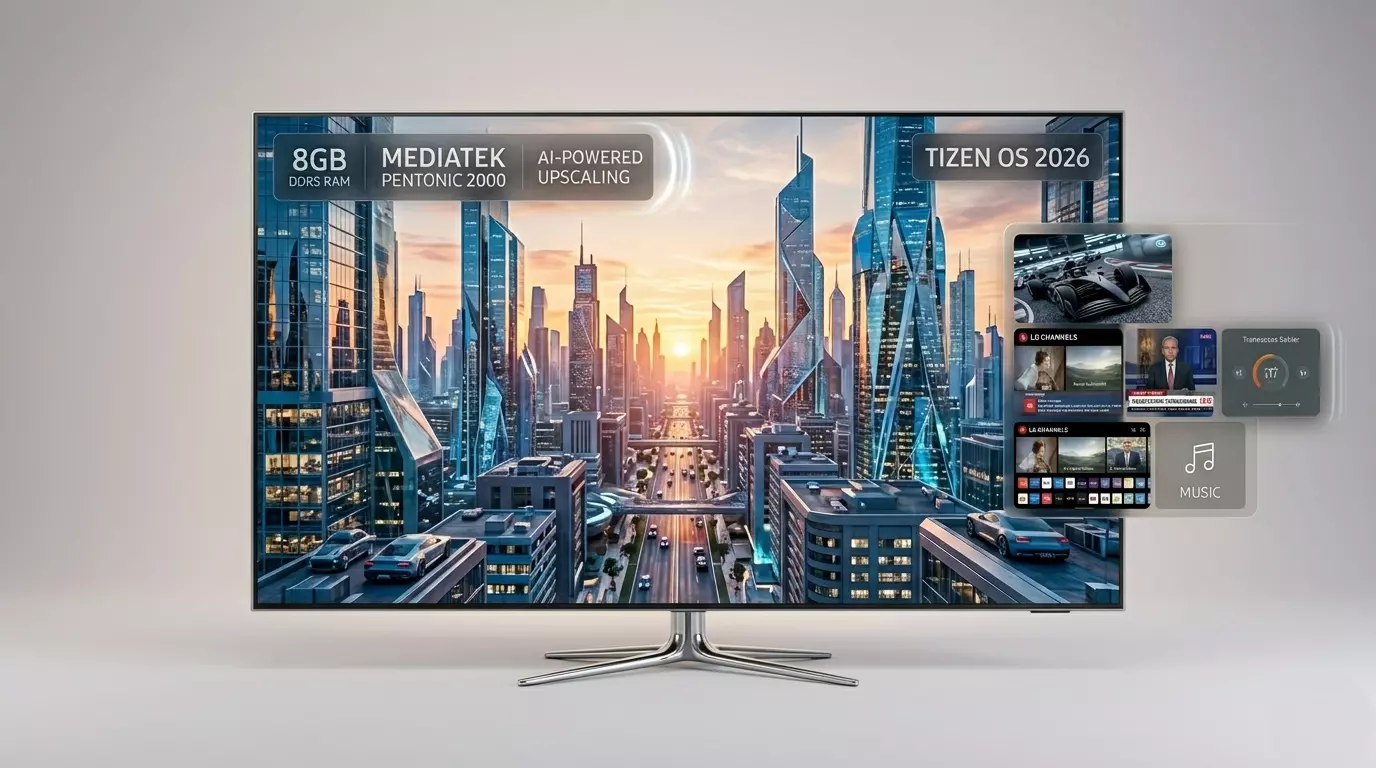
Samsung continues to evolve Tizen, focusing heavily on SmartThings integration and gaming services. Because the OS is written specifically for proprietary hardware, it runs significantly smoother than budget Android boxes.
- Hidden Fact: In 2026, Tizen employs AI-Caching technology, which predicts which app you’ll open next and pre-loads its data into the RAM.
- The Catch: The system is lightning-fast but "closed." You won't be able to side-load third-party APK files like you can on Android.
Top Recommendation: Samsung Neo QLED QN90 and above. These feature flagship neural processors that make menu navigation instantaneous.
3. webOS (LG): The Gold Standard of Ergonomics
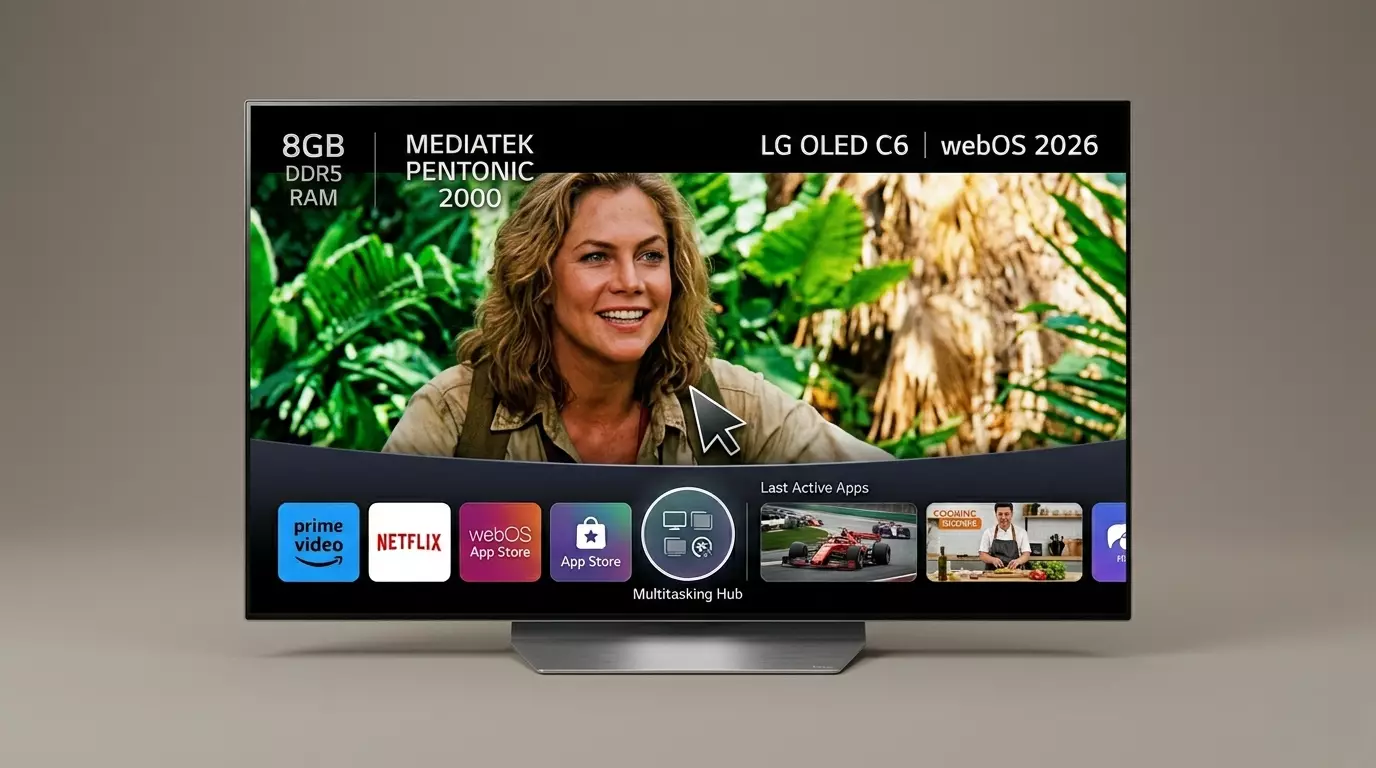
By 2026, LG's webOS has fully transitioned to a full-screen interface. Its biggest advantage is true multitasking; you can switch between a resource-heavy console game and a streaming service without the apps restarting.
- Technical Detail: Operating the Magic Remote requires a high cursor polling rate. On weak processors, the cursor feels "floaty." In premium models, the interface refresh rate is synced with the 120Hz screen, providing an incredibly fluid feel.
Top Recommendation: LG OLED C6 or G6 series. The "A" series models (entry-level OLEDs) often use stripped-down processors, so for true speed, stick to the "C" series or higher.
4. Why Smart TVs Lag: The Hidden Culprits
Even the best OS can perform poorly if the manufacturer cuts corners on the small stuff:
- Storage Type: Cheap models still use slow eMMC 5.1 storage. In 2026, flagships have moved to UFS 3.1 equivalents, where read speeds are many times higher. This directly impacts how fast heavy apps like Netflix or Apple TV+ launch.
- Cache Clutter: Unlike PCs, TVs are notorious for poor cache management. Models with "Instant On" features rarely perform a full system reboot, allowing errors to accumulate over years of use.
Practical Advice for 2026 Buyers:
- Wi-Fi 6/6E is Mandatory: Most "lag" during 4K playback isn't the processor's fault—it's a congested 2.4 GHz Wi-Fi band. Look for AX standard support.
- Check the CPU: If the specs just say "4-core processor" without a brand name, be wary. Aim for MediaTek Pentonic series chipsets—they are the current "gold standard" for TV performance.
- Ignore Internal Storage: Whether it's 16GB or 32GB doesn't matter much. What matters is the RAM. For a smooth 2026 experience, you need at least 3GB.
5. Alternative Systems: VIDAA and Fire TV
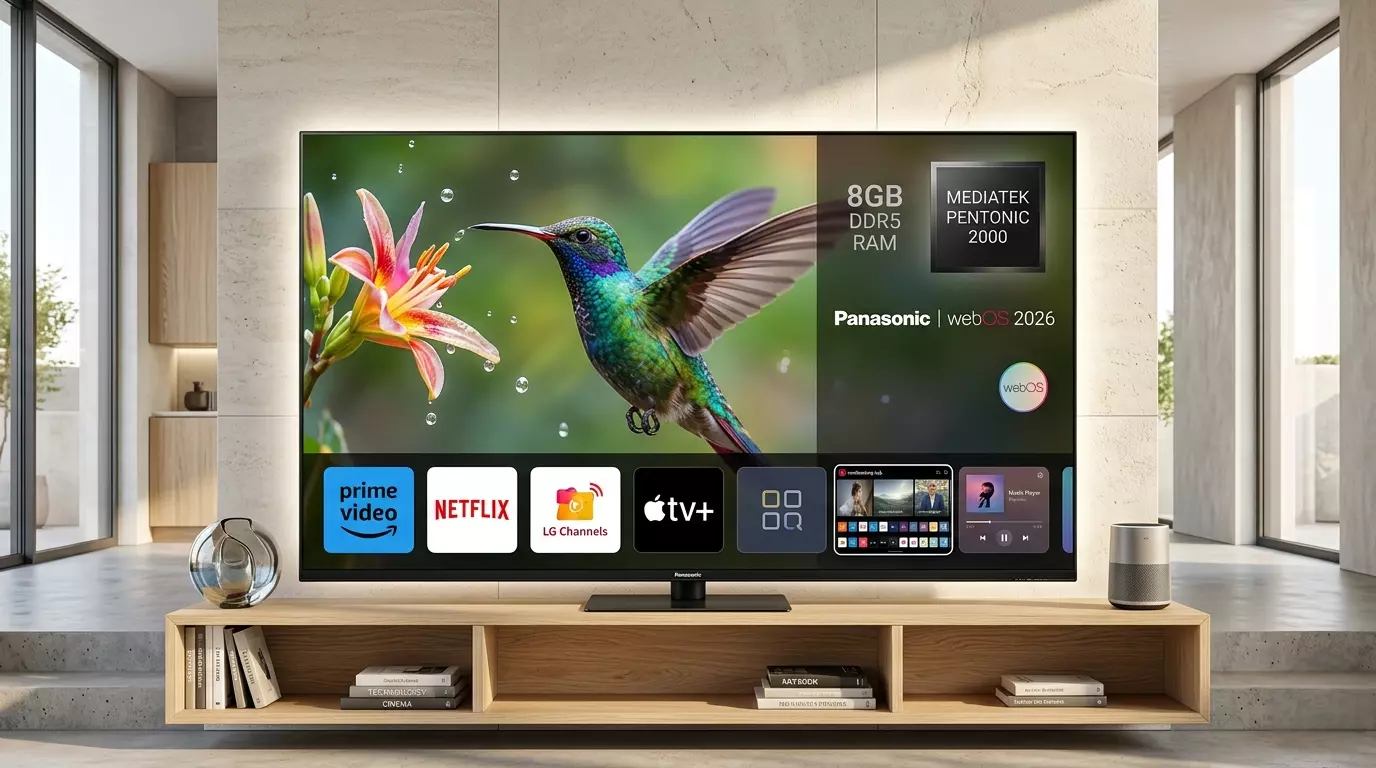
Beyond the "Big Three," the 2026 market is also dominated by systems that are often underrated but frequently outperform the leaders in raw speed.
- VIDAA (Hisense): This is the "lightest" skin on the market. Built on Linux, it lacks Google's heavy background services. If you want a TV that turns on in 2 seconds and switches channels instantly, this is it.
- The Downside: A smaller selection of niche apps (like local media players).
- Product Example: Hisense U8N / U9 Series. Paired with Hi-View Engine chips, the system literally flies.
- Fire TV (Amazon/Panasonic): In 2026, Panasonic fully committed to Fire TV. It's a deeply modified version of Android but features very aggressive video caching.
- Product Example: Panasonic Z95A (OLED). The interface speed here is perfected thanks to custom CPU cooling that prevents thermal throttling under load.
6. Technical Nuance: Why 120Hz Isn't Just for Gaming
A little-known fact is that Smart TV smoothness is tied to the panel's refresh rate.
- On 60Hz models, menu animations are rendered with motion blur, which the brain often perceives as "lag."
- On 120/144Hz (VRR) models, the interface is as smooth as a flagship smartphone. This creates a tactile sense of responsiveness when you press a button on the remote.
7. The Hardware Secret: Pentonic Chips and AI Upscaling
In 2026, a TV's real power is determined by its chipset. The leader is the MediaTek Pentonic 1000/2000.
- The Benefit: These processors support "Precision Detail" technology, which sharpens the interface on the fly.
- Insider Info: Budget TVs often use "checkerboard" rendering for menus to hide a lack of power. High-end Pentonic models render everything in native 4K, eliminating "blurriness" when scrolling quickly through movie lists.
8. How to Choose a TV That Won't Be Obsolete in 3 Years (Checklist)
To avoid needing an external streaming stick by 2028, verify these three parameters:
- Wi-Fi 6E or Wi-Fi 7 Support: Internal internet speeds in 2026 should exceed 500 Mbps to handle cloud gaming services without latency.
- RAM Capacity: A strict 4GB for Google TV and 3GB for Tizen/webOS. Anything less is a potential "brick" after a couple of firmware updates.
- Dedicated NPU (Neural Processing Unit): A dedicated AI block handles audio and image processing, leaving the main CPU cores free to run the menus.
Final Verdict: What Should You Buy?
- For Maximum Speed and Flexibility: Google TV models with the Pentonic 1000 processor (Sony or Philips flagships).
- For Stability and Ecosystem: Samsung Neo QLED (Tizen)—the best software-to-hardware optimization.
- For Comfort and Cinema: LG OLED C/G Series—the most balanced and responsive webOS experience.
Practical Life Hack: If your Smart TV starts lagging in 2026, the first thing you should do isn't a factory reset—it's disabling the "Video Previews in Recommendations" feature. This can free up to 30% of your CPU's power.